

Application Scenarios of Optical Modules
Optical modules are photoelectronic devices that perform photoelectric and electro-optical conversion. The transmitting end of the optical module converts the electrical signal into an optical signal, and the receiving end converts the optical signal into an electrical signal. Softel Optical Fiber presents the application of optical modules in various industries. The main application fields of optical modules include:
1) Data Center;
2) Mobile Communication Base Station;
3) Passive Wavelength Division system;
4) SAN/NAS storage network;
5) 5G bearer network.
1. Data Center.
The current data center is no longer just one or a few computer rooms, but a group of data center clusters. In order to realize the normal operation of various Internet services and application markets, data centers are required to operate in coordination. The real-time mass exchange of information between data centers has created the demand for data center interconnection networks, and optical fiber communication has become a necessary means to achieve interconnection.

Hangzhou Softel talks about the application of optical module
Different from the traditional telecommunication access network transmission equipment, the data center interconnection requires higher speed, lower power consumption, and smaller size of the switching equipment in order to achieve larger and denser transmission of information. A core factor that determines whether these performances can be achieved is the optical module.
Data center communication optical modules can be divided into three categories according to the connection type:
(1) From the data center to the user, it is generated by end-user behaviors such as accessing the cloud to browse web pages, send and receive emails, and stream video;
(2) Data center interconnection, mainly used for data replication, software and system upgrade;
(3) Inside the data center, it is mainly used for information storage, generation and mining. According to Cisco's forecast, the internal communication of the data center accounts for more than 70% of the communication of the data center. The great development of data center construction has also given birth to the development of high-speed optical modules.
2. Mobile Communication Base Stations.
A mobile communication base station refers to a radio transceiver station that transmits information with a mobile phone terminal through a mobile communication switching center in a certain radio coverage area.

Hangzhou Softel talks about the application of optical module
The operator's mobile communication base station also needs optical modules to realize the interconnection between devices. The base station has RRU and BBU devices. In the application, we need to connect the links of these two devices, which requires our optical modules. And fiber jumpers, in the 4G network, the equipment used for BBU and RRU connection is mainly 1.25G optical module, 2.5G optical module, 6G optical module, 10G optical module and so on.
3. Passive WDM System
Among the technical solutions used in the 5G fronthaul, passive wavelength division undoubtedly accounts for the highest proportion. The passive wavelength division system consists of color light modules, multiplexers and optical fibers.
The core principle of passive wavelength division technology is to use WDM technology to couple optical signals with different wavelengths and carry a series of information into a bundle, and transmit them in one optical fiber to realize the transmission between services. WDM can transmit multiple signals at the same time along a single fiber. It can transmit each signal with a certain wavelength of light that matches the signal, and can separate these optical signals of different wavelengths at the receiving end. The passive wavelength division system is mainly composed of a color light module and an OTM and two parts.
4. SAN / NAS Storage Network.
With the rapid development of the Internet and network applications, the types of data that the data information storage system needs to process is also increasing explosively, which makes the data information storage system face unprecedented challenges. Attached network storage device (Network Attached Storage, abbreviated as NAS) and area storage network (Storage Area Network abbreviated as SAN). With good scalability, it provides the most effective solution for centralized data management.

Hangzhou Softel talks about the application of optical module
The main function of the SAN/NAS storage network is to store data. Among them, the SAN network is mainly composed of servers, fiber channel switches, storage devices, and transmission carriers (optical modules, fiber jumpers); the NAS storage network is mainly composed of NAS storage, switches, It consists of terminal equipment (computer), transmission carrier (optical module, optical fiber jumper).
It should be noted that the SAN network uses Fibre Channel optical modules, which need to support the FC Fibre Channel protocol, while the optical modules used in the NAS storage network only need to comply with the Ethernet protocol.
5. 5G Bearer Network.
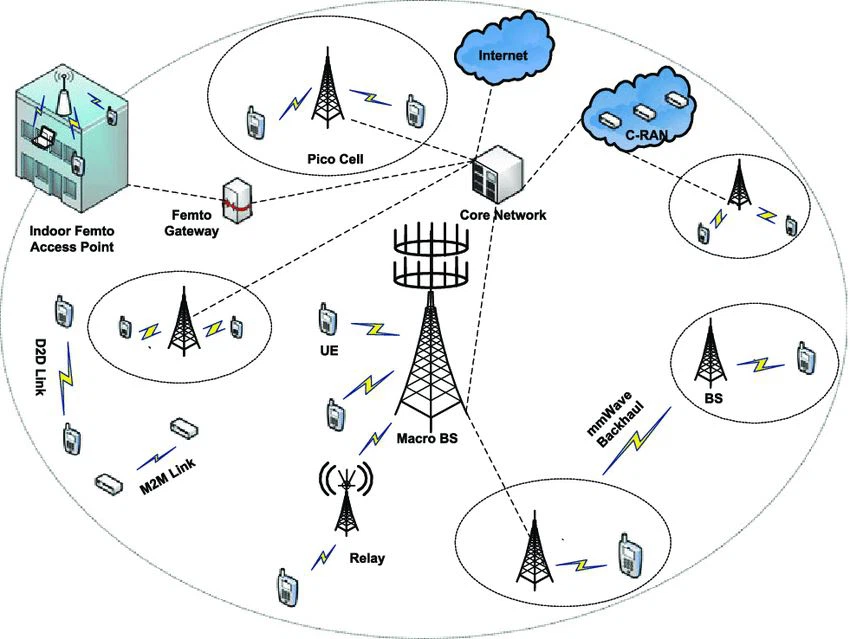
The 5G network is divided into three parts, namely the access network, the bearer network and the core network. To understand the relationship between them, you can refer to the following picture:
Hangzhou Softel talks about the application of optical module
The 5G bearer network is generally divided into metro access layer, metro aggregation layer, metro core layer/provincial trunk line, and realizes the fronthaul and middle backhaul functions of 5G services.
Typical application scenarios of 5G fronthaul include direct optical fiber connection, passive WDM, and active WDM.
The typical requirements for optical modules in 5G fronthaul application scenarios are as follows:
1). Meet the industrial temperature and high reliability requirements: Considering the outdoor working environment, the front-haul optical module must meet the industrial temperature range of -40℃~+85℃, and also need to meet the requirements of dust-proof.
2). Low Cost: The demand for 5G optical modules greatly exceeds that of 4G. In particular, there may be particularly high demand for fronthaul optical modules. Low cost is one of the main requirements of the 5G industry for optical modules. In 5G, the backhaul covers the access layer, aggregation layer and core layer of the metro area. The required optical modules are not much different from the optical module technology currently used in data centers. The access layer will mainly use 25Gb/S, 50Gb/S, 100Gb/ S and other optical modules, the convergence layer and above will use 100Gb/S, 200Gb/S, 400Gb/S and other DWDM optical modules.
Finally, it has to be said that the growth demand of optical modules mainly depends on the data communication market and the telecommunication market. In today's data era, optical modules are bound to usher in new development opportunities.


