In today's era of ever-evolving computing power and applications and services, the development of multi-dimensional capacity enhancement technologies such as signal rate, spectral width, multiplexing mode, and transmission medium is at the forefront of innovation. Improving interface and channel signaling rates is a top priority in the industry.
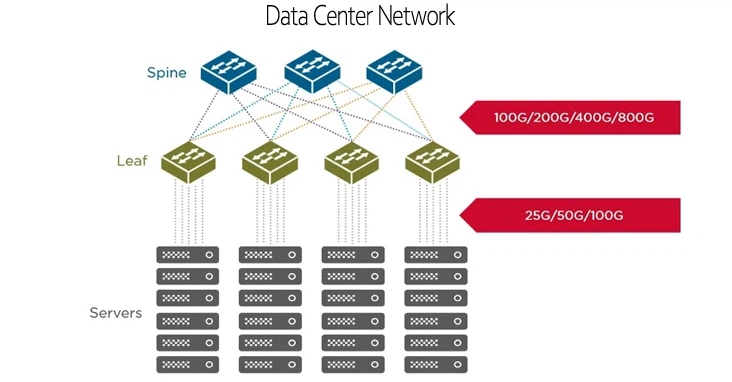
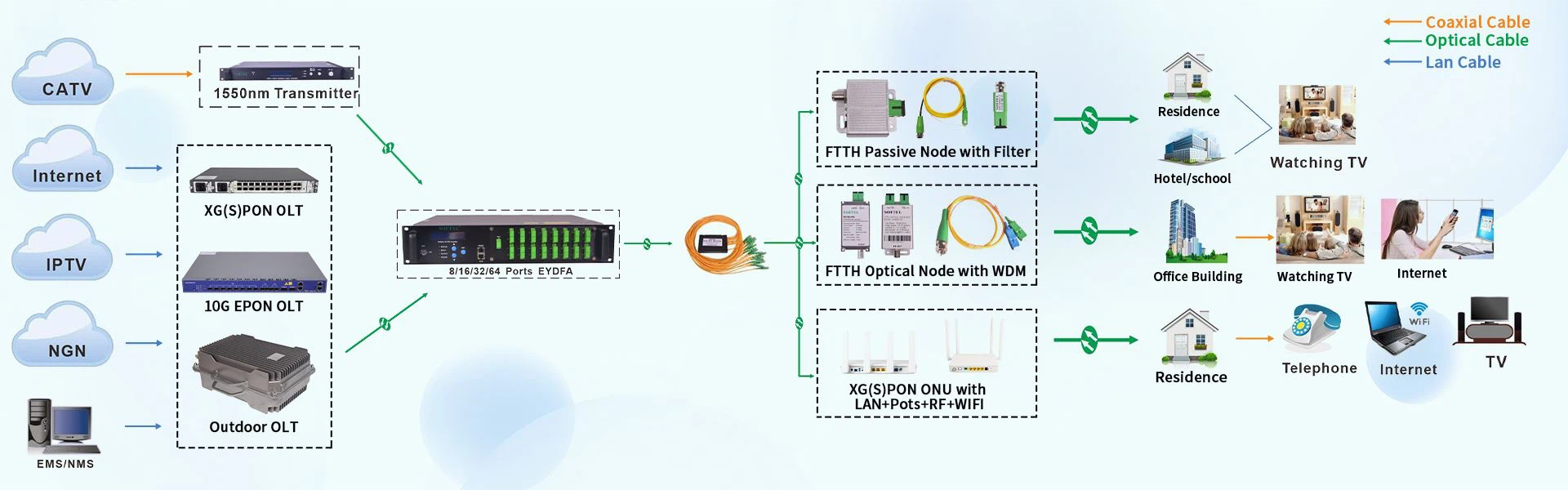
While the deployment of 10G PON in the access network continues to expand, the technical standards of 50G PON tend to be stable, and the competition for 100G/200G PON solutions is fierce. The transmission network is mainly based on 100G/200G expansion, and the proportion of internal and external interconnection rates in 400G data centers is expected to increase. At the same time, the development of higher rates such as 800G/1.2T/1.6T and the research on technical standards are supported by the 1.2T or higher rate coherent DSP processing chip products or public development plans expected to be released by foreign optical communication head manufacturers. Regarding the available frequency spectrum for transmission, the industry's convergence solution has been to gradually expand the commercial C-band to the C+L frequency band.
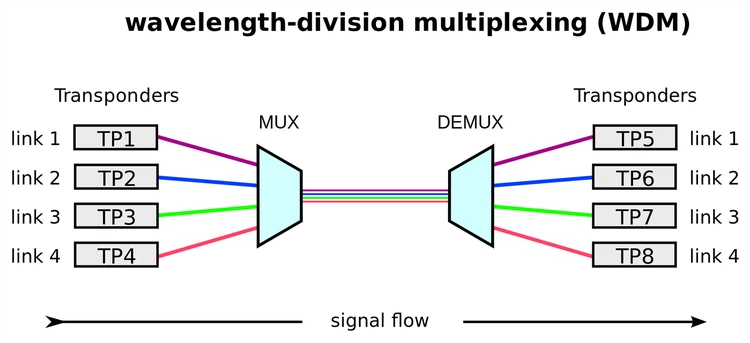
This year, it is expected that the laboratory transmission performance will further improve with the expansion of the research area, such as S+C+L frequency bands. Multiplexing technology, especially space division multiplexing technology, can solve the bottleneck problem of transmission capacity for a long time. Submarine cable systems with increasing fiber pairs will continue to be widely deployed and expanded. In-depth research on mode multiplexing and/or multi-core multiplexing techniques will focus on improving transmission distance and performance. In terms of new transmission media, G.654E ultra-low loss optical fiber is expected to be popularized in trunk networks and strengthen deployment. A space-division multiplexing optical fiber (optical cable) will continue to be researched, and its multiple advantages such as spectrum, low delay, low nonlinear effect, and low dispersion have attracted the attention of the industry while optimizing transmission loss and drawing process.
In addition, domestic operators are expected to launch DP-QPSK 400G long-distance performance, 50G PON dual-mode coexistence, symmetrical transmission capabilities, and other high-speed existing networks in 2023. The completion of the test and verification work can further verify the maturity and commercial deployment of typical high-speed interface products Foundation. With the increase in data interface rate and switching capacity, the optical module of the basic unit of optical communication now requires higher integration and lower energy consumption. In specific data center application scenarios, when the switching capacity reaches 51.2Tbit/s and above, integrated optical modules with a rate of 800Gbit/s and above may face competition from pluggable and photoelectric packages (CPO). Intel, Broadcom, Ranovus, and other silicon photonics technology companies are expected to continue to update existing CPO products and solutions while potentially launching new models, while others keep a close eye on R&D.