

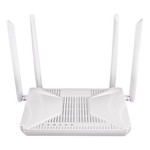


SD IRD (DVB-S/S2/T/C SD IRD)
We aim at marketization and industrialization, uphold the basic model of integrated R&D and collaborative innovation, and focus on new development of Outdoor Modular Optical Node, Dual Brand Wifi Router, Indoor Fiber Termination Box, key technology breakthroughs and application development. We continue to innovate and improve the company's systems, further sort out the company's code of conduct, and establish a new purpose of serving the market and consumers. Base on the business concept of Quality first, we would like to meet more and more friends in the word and we hope provide the best product and service to you. Our goal is to maintain a strong position in the market and finance and always maintain a leading position in the product market.
Digital Cable TV Headend IRD

Digital cable tv headend ird SFT356 xL HD is an all-in-one device which integrates demodulation, de-scrambler, re-mux and decoding in one case to convert RF signals into audio/video (CVBS /YpbPr /HDMI) output.
Key Features of Digital Cable TV Headend IRD
Demodulation + descrambler +re-mux+decoder modules in one box
1 DVB-C/T/T2/S/S2/ATSC-T Tuner inputs optional
1 ASI & 1 IP (UDP) input for re-mux
One CAM can decrypt multiple programs from Tuners
Support BISS descrambling (Up to 120Mbps)
Support MPEG2 and MPEG4 AVC/H.264 decoding
IP (1 MPTS & 8 SPTS) over UDP and RTP/RTSP output; ASI out
Support maximum 128 PID mapping per input
Support low latency function
Pluggable and changeable demodulator and decoder modules
LCD display, Remote control and Firmware, web NMS management
Updates via web
Parameters
Input
1 x Tuner, F type |
1×ASI input for re-mux, BNC interface |
1xIP input for re-mux (UDP) |
Tuner Section
| DVB-C | |
Standard | J.83A(DVB-C), J.83B, J.83C |
Input Frequency | 30 MHz~1000 MHz |
Constellation | 16/32/64/128/256 QAM |
DVB-T/T2 | |
Input Frequency | 30MHz ~999.999 MHz |
Bandwidth | 6/7/8 M bandwidth |
DVB-S
| Input Frequency | 950-2150MHz | |
Symbol rate | 2-45Msps | |
Signal Strength | - 65- -25dBm | |
Constellation | 1/2, 2/3, 3/4, 5/6, 7/8 QPSK | |
DVB-S(Version 1) | ||
Input Frequency | 950-2150MHz | |
Symbol rate | QPSK 1~45Mbauds; | |
Code rate | 1/2, 3/5, 2/3, 3/4, 4/5, 5/6, 8/9, 9/10 | |
Constellation | QPSK, 8PSK | |
DVB-S(Version 2) | ||
Input Frequency | 950-2150MHz | |
Code rate | 1/2, 3/5, 2/3, 3/4, 4/5, 5/6, 8/9, | |
Constellation | QPSK, 8PSK, 16APSK, 32APSK | |
Symbol rate | QPSK 1~45 Msps; | |
Output
| IP | 1*MPTS & 8*SPTS over UDP, RTP/RTSP. |
2×ASI | BNC interface, mirrored out |
Decode | Video Interface: 1xCVBS/YPbPr/HDMI Chroma: 4:2:0 |
Low Latency | 240Ms-320Ms |
System
| Local interface | LCD + control buttons |
Remote management | Web NMS Management |
Language | English |
Upgrade | USB, web management |
General
| Power supply | AC 100V~240V |
Dimensions | 482*300*44.5mm |
Weight | 3.5 kgs |
Operation temperature | 0~45℃ |

Quality first' in mind, we work closely with our customers and provide them with efficient and professional services for SD IRD (DVB-S/S2/T/C SD IRD). We adhere to market-oriented, innovation-driven, brand management as the core, capital operation as the means, and strive to build the company into an all-round leading enterprise. We establish the concept of competition and cooperation, respect our competitors, learn from our competitors, and hope to win-win results in competition and cooperation with our competitors.
You Might Also Like


Send Inquiry